Rethinking Dataset Distillation: Hard Truths about Soft Labels
14 Oct 2026 under Research Highlights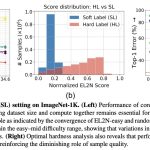
Despite the perceived success of large-scale dataset distillation (DD) methods, recent evidence finds that simple random image baselines perform on-par with state-of-theart DD methods like SRe2L due to the use of soft labels during downstream model training. This is in contrast with the findings in coreset literature, where high-quality coresets consistently outperform random subsets in […]
High dynamic range of neuromorphic camera
14 Oct 2026 under Research Highlights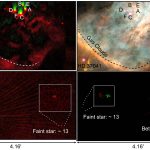
High dynamic range of neuromorphic camera: (a) Image of the Trapezium cluster formed by accumulating events in 200ms window from the neuromorphic camera with a slewing telescope, where red represents positive events and green indicates negative vents. (b) Optical image of the Trapezium star cluster observed through the Hubble Space Telescope {odell1995}. (c) Image of […]
Neuromorphic Camera Snapshots of Potential Meteorite Events Near the Moon and Earth
14 Oct 2026 under Research Highlights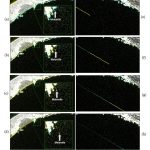
Meteorite Snapshots: Snapshots of a potential meteorite passing over the Moon were taken on February 12, 2024, at 13:52:01 UTC. Panels (a), (b), (c), and (d) depict the sequence of the meteorite’s trajectory near the Moon. Additional snapshots were taken on February 13, 2024, at 14:21:01 UTC, capturing a potential meteorite passing close to Earth. […]
Working Principles and Performance Comparison of Neuromorphic and Conventional Cameras for Celestial Observation
14 Oct 2026 under Research Highlights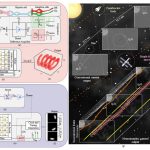
Working principles of neuromorphic and conventional cameras. (a) Structure of a neuromorphic camera pixel, with components analogous to the human retina: a photodiode (photoreceptor), difference amplifier (bipolar cells), and comparators (on-off ganglion cells), including the transformation of light intensity into the logarithmic domain and the spike generation process. (b) Asynchronous data transmission in the neuromorphic […]
Observational Setup of the Neuromorphic Camera on the 1300 mm DFOT Telescope at Devasthal, ARIES, India
14 Oct 2026 under Research Highlights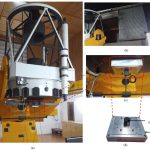
Observational setup for neuromorphic camera-based celestial observations using the 1300 mm DFOT telescope at Devasthal, ARIES, India. (a) The neuromorphic camera installed at the focal plane of the telescope. (b) Roll-off rooftop moving back to expose the telescope to the night sky. (c) Close-up view of the neuromorphic camera mounted on telescope using a custom […]
Celestial Imaging Using a Neuromorphic Camera on the 1300 mm DFOT
14 Oct 2026 under Research Highlights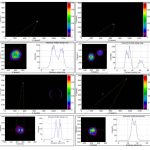
Celestial Observations with the neuromorphic camera on the 1300 mm DFOT. False colors are used to emphasize variations in pixel intensity within the grayscale images for visualization purposes. Images captured include: (a) HIP 9884, V-band magnitude 2, 10s acquisition. (b) Zoomed view of HIP 9884 showing a donut-shaped profile and the corresponding intensity profile along […]
Using Gamma Oscillations to understand high-level cognition
14 Oct 2026 under Research Highlights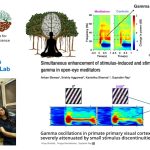
Prof. Supratim Ray’s lab studies the neural basis of high-level cognition such as selective attention and meditation, with a focus on a brain rhythm called “gamma” (30-80 Hz), which is thought to be associated with high-level cognitive processes. Top: Gamma oscillations, which attenuate with heathy ageing and onset of mental disorders, are stronger in long-term […]
Reliable Reinforcement Learning with Function Approximation: Restoring Monotonic Policy Improvement
19 Jun 2026 under Research Highlights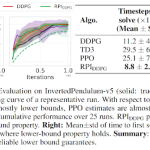
Reliability challenges of reinforcement learning under function approximation, revealing how popular algorithms such as DQN can converge to highly sub-optimal policies. To address this, the work introduces Reliable Policy Iteration (RPI), the first function-approximation-based framework with provable monotonic improvement and convergence guarantees. A practical model-free variant integrates seamlessly with DQN and DDPG, achieving robust and […]
Geo-Cultural Fairness and Dataset Provenance in Large Language Models
19 Jun 2026 under Research Highlights
Geo-cultural biases in large language models across travel recommendations and story generation, revealing disparities in representation for poorer regions. The work also introduces STAMP, a dataset watermarking framework that enables creators to detect unauthorized use of proprietary data in language model training, promoting transparency, attribution, and responsible AI development. Faculty: Danish Purthi
Secure and Privacy-Preserving Computing for the Post-Quantum Era
19 Jun 2026 under Research Highlights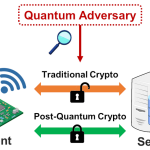
The Secure Intelligent and Efficient Systems (SINESys) Lab at IISc is advancing next-generation cryptographic solutions for secure IoT and edge computing applications. The research focuses on post-quantum cryptography and privacy-preserving computation through efficient software implementations and hardware accelerators optimized for resource-constrained platforms. Recent contributions include optimized pairing-based functional encryption for privacy-preserving edge analytics on Raspberry […]
AI-Driven Multi-Modal Anomaly Segmentation and Biomarker Discovery for Precision Neurovascular Imaging
19 Jun 2026 under Research Highlights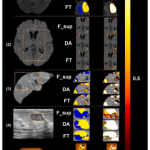
Develops weakly supervised and physics-informed AI frameworks for anomaly segmentation and biomarker extraction across multi-modal medical imaging. Applications include diabetic retinopathy, stroke, intracerebral haemorrhage, lacunas, and microbleeds. The work integrates lesion simulation, domain adaptation, federated learning, and explainable AI to enable robust precision diagnostics in low-data clinical settings. Faculty: Vanathi Sundaresan
Engineering Neuronal Network Architecture Using Flexible PDMS Micropillar Scaffolds
19 Jun 2026 under Research Highlights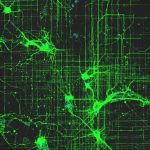
The use of flexible PDMS micropillar scaffolds to guide in vitro neuronal growth and network organization. By varying interpillar geometry, neurite alignment, thickness, and growth orientation were modulated, revealing the critical role of surface topography in neural tissue engineering and the development of functional neuronal networks. Faculty: Vini Gothum
Energy-Efficient EMG-Based Real-Time Gesture Recognition for Wearable Biomedical Applications
19 Jun 2026 under Research Highlights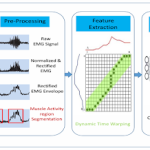
Advanced wearable biomedical systems through the development of an ASIC for real-time EMG-based gesture recognition. The proposed framework integrates signal acquisition, preprocessing, feature extraction, and CNN-based classification for efficient hardware implementation, enabling low-power wearable interfaces for hands-free control, assistive technologies, and AR/VR applications. Faculty: Debayan Das
Correlating the non-linear time series and spectral properties of IGR J17091-3624: is it similar to GRS 1915+105?
10 May 2022 under Research Highlights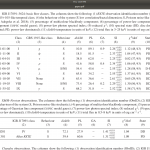
Using the correlation integral method, we explore the non-linear properties of black hole sources IGR J17091-3624 by comparing the underlying behaviour to GRS 1915+105. We find that while GRS 1915+105 is known to reveal a combination of fractal (or even chaotic) and stochastic behaviours, IGR J17091-3624 mostly shows stochastic behaviour. Therefore, although several observations find […]
Interactions between emotion, motivation, and cognition.
10 May 2022 under Research Highlights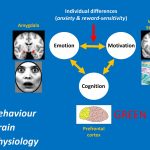
Throughout our lives, emotional and/or motivational factors influence our thoughts and actions. Hence, there is a clear need to understand how emotion, motivation, and cognition interact in the human brain. Knowledge of brain mechanisms underlying these interactions is not only relevant to our healthy lives but also has potential clinical relevance. In mental disorders such […]
Materials for neuromorphic computing
10 May 2022 under Research Highlights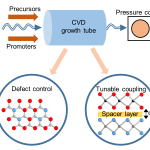
Defects in TMDs (vacancies, substitutional atoms) have been proposed for optical memories and neuromorphic computing. Chemical vapour deposition (CVD) is a synthesis process that allows controllable defect control by careful tuning of process parameters. We are exploring the use of different growth environments (gases, solid or gaseous precursors), as well as after-growth cooling rates to […]
Spatiotemporal organization of cell signaling
10 May 2022 under Research Highlights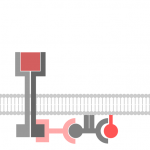
Cells use a set of molecular processes, called cell-signaling, to recognize and respond to stimuli. Cell-signaling processes work together to sense the outside world by recognizing, processing, and transmitting signals within and outside a cell. Most of these processes require the molecules within the cell to organize in specific fashion in various cellular locations, which […]
Capturing brain inspired functionalities in molecular circuit elements
10 May 2022 under Research Highlights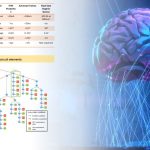
We are designing molecular circuit elements that capture intelligence, cognition and decision-making ability at nanoscale material properties. Our aim is to come up with devices that can operate on the verge of chaos and offer the maximum training efficiency with a minimum energy consumption. Faculty: Sreetosh Goswami References: Sreetosh Goswami*, Rajib Pramanick, Abhijeet Patra, et.al. […]
Cross-Modal Retrieval
10 May 2022 under Research Highlights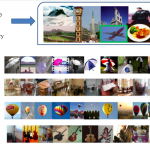
In IACV Lab, we work on various applications in Computer Vision and Machine Learning, one area being cross-modal matching. Due to increase in the number of sources of data, research in cross-modal matching is becoming an increasingly important area of research. It has several applications like matching text with image, matching near infra-red images with […]
Large scale computational model of fusion plasmas
10 May 2022 under Research HighlightsThe main focus of our research group is on neural network assisted large scale computational model of fusion plasmas. This research project aims to provide detailed insights into tokamak plasma stability using advanced numerical simulations and is aligned with the mainstream R&D program of ITER. ITER is the largest experimental fusion reactor being constructed presently […]
Homogeneous Length Functions on Groups: Intertwined Computer and Human Proofs
10 May 2022 under Research Highlights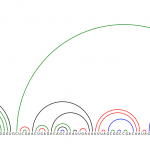
This work was an interplay between human and computer proving which played a role in the discovery of an interesting mathematical result. The unusual feature of the use of computers here was that a computer generated but human readable proof was read, understood, generalized and abstracted by mathematicians to obtain the key lemma in an […]
The basal ganglia control the detailed kinematics of learned motor skills
10 May 2022 under Research Highlights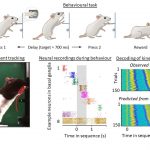
The basal ganglia are known to mediate action selection, but whether and how they contribute to specifying the kinematics of learned motor skills is not understood. We probed this question by recording and manipulating basal ganglia activity in rats trained to generate complex task-specific movement patterns with rich kinematic structure. We found that the basal […]
Prognostic estimates and scenario analysis of COVID-19
10 May 2022 under Research Highlights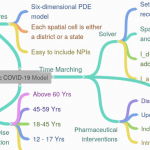
A novel predictive modeling framework for the spread of infectious diseases using high-dimensional partial differential equations is developed and implemented. Prognostic estimates of Covid-19 spread using a six-dimensional (time, 2D space, infection severity, duration of infection, and population age) modelled in this framework. These insights have been used by local states to frame science-informed policies. […]
Arnab Barik
10 May 2022 under Research Highlights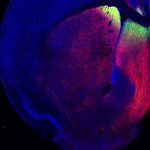
Stepping barefoot on a pin is excruciatingly painful and evokes an intense and immediate physical reaction as well as an emotional response. We rub our feet where it hurts, we scream in pain, we move away from the spot to avoid experiencing the pain a second time. We also remember the spot on the floor […]
Deep Learning for Satellite Oceanography
10 May 2022 under Research Highlights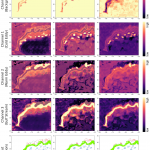
We developed a W-Net architecture, a novel structure inspired from the classical U-Net architecture for semantic segmentation. Two U-net like branches are used, one for SST data and one for SSH data. The two branches give a segmentation with high accuracy for Gulf Stream and Rings. Using two parallel Encoder-Decoder networks (one branch for SST […]
Computation of Signals at synapses
10 May 2022 under Research HighlightsOur group try to decipher real time molecular mechanisms that contribute to fidelity of signal processing at synapse. We combine nanobiology with imaging of stochastic processes at synapses at single molecule resolution using both conventional and neuromorphic detectors at nanoscale. Our goal is to generate realistic realtime nanoscale model to understand signal transmission at synapse. […]
AI-driven XraySetu for early-Covid interventions over WhatsApp [Chiranjib Bhattacharyya, CSA]
15 Jun 2021 under Research Highlights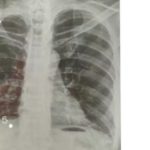
The project was started by Dr. Geetha Manjunath of Niramai Health and Prof. Chiranjib Bhattacharyya of IISc, in the first wave of Pandemic to address the issue of Accessibility of Healthcare in the context of COVID-19. The key premise behind the project was X-rays are far more ubiquitous than RTPCR tests and a diagnostic tool based […]
A generalized framework for projection-based methods for sampling in MRI systems [ K. V. S. Hari, ECE]
15 Jun 2021 under Research Highlights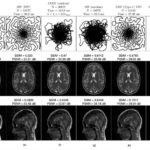
MRI collects samples in the Fourier domain, called as the k-space. The k-space is traversed along continuous trajectories using varying magnetic gradients. Limited by hardware and physiological factors such as gradient magnitude, gradient slew rate and MRI signal decay, long scan times are required to traverse the complete k-space. Scan time reduction in MRI is […]
Gamma oscillations as a biomarker for early diagnosis of Alzheimer’s Disease (AD) [Supratim Ray, CNS]
15 Jun 2021 under Research Highlights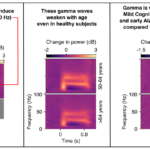
Electrical signals recorded from the brain often show fluctuations between 30-80 Hz, which is called the gamma rhythm. These can be induced by simply viewing images with black and white patterns, called gratings. We recorded brain signals using a non-invasive technique called electroencephalogram (EEG) from ~250 elderly subjects while they viewed gratings, and found that […]
Estimating the COVID-19 burden in Karnataka [Rajesh Sundaresan, ECE]
15 Jun 2021 under Research Highlights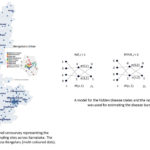
This work, a Karnataka-wide COVID-19 serological survey, provided a wealth of information about the state of the pandemic. It enabled principled and data-driven public health responses (testing strategies, district-level response recommendations, etc.). It highlights how to leverage the existing public health infrastructure, gather useful local information, and shape targeted responses at the district/taluk level. It […]
Deep Unsupervised Speech Representation Learning [Sriram Ganapathy, EE]
11 Jun 2021 under Research Highlights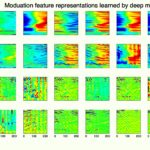
The performance of speech systems is degraded in the presence of noise. The principle of modulation filtering attempts to remove the spectro-temporal modulations that are susceptible to noise. While traditional approaches use modulation filters that are hand-crafted, we propose a novel method for modulation filter learning using deep variational models. Specifically, we pose the filter […]
Neuromorphic CMOS-MoS2 based hybrid system for low power edge-computing [Chetan Singh Thakur, ESE]
11 Jun 2021 under Research Highlights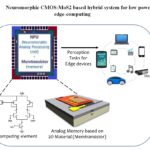
The brain is an ideal template for next-generation computing architectures. We, at NeuRonICS lab IISc, have developed a hybrid architecture [1] that combines a silicon neuron, acting as the computing unit, with a 2D nanosheet of molybdenum sulphate, acting as a memristor that works like a synapse [2]. This can improve power use and performance […]
Temporal Self-Organization: A Reaction-diffusion Framework for Spatio-temporal Memories [Shayan Garani, ESE]
06 Jun 2021 under Research Highlights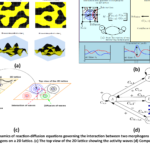
Self-organizing maps find numerous applications in learning, clustering and recalling spatial input patterns. The traditional approach in learning spatio-temporal patterns is to incorporate time on the output space of a self-organizing map along with heuristic update rules that work well in practice. Inspired by the pioneering work of Alan Turing, who used reaction-diffusion equations to […]
Multiplicative mixing of object identity and image attributes in single inferior temporal neurons [SP Arun, CNS]
06 Jun 2021 under Research Highlights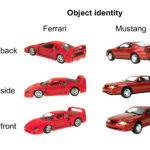
Knowing a Ferrari from a Mustang from an image can be hard because one has to detect their unique features while ignoring large image variations due to changes in view, size, position etc. Successful recognition requires both object identity and image attributes to be represented efficiently but precisely how the brain does it has been […]
An Analogue Neuromorphic Co-Processor That Utilizes Device Mismatch for Learning Applications [Chetan Singh Thakur, ESE]
06 Jun 2021 under Research Highlights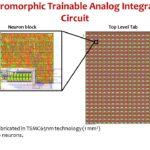
As the integrated circuit (IC) technology advances into smaller nanometre feature sizes, a fixed-error noise known as device mismatch is introduced owing to the dissimilarity between transistors, and this degrades the accuracy of analog circuits. We present an analog co-processor that uses this fixed-pattern noise to its advantage to perform complex computa- tion. This circuit […]
Red induces strong gamma oscillations in the brain [Supratim Ray, CNS]
06 Jun 2021 under Research Highlights
What changes inside the brain when one sees a colourful flower as opposed to a grayscale version of it? How do the brain signals change when one sees a green jackfruit versus a red tomato? Does the redness of the tomato matter? We studied such questions by recording signals from the primary visual cortex (an […]
Microchips and Systems For Brain Computer Interface [Hardik J Pandya, DESE]
06 Jun 2021 under Research Highlights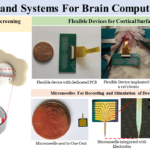
The BEES Lab, DESE, IISc focuses on developing microchip-based system solutions for screening, diagnostic, and therapeutic applications in neuroscience and neurophysiology. The group develops single and multi-shank silicon microneedles integrated with microelectrodes and related signal conditioning modules to record neural biopotentials and signals and electrical stimulation of deep brain regions. These microneedle-based systems find applications […]
Neural computations underlying cognition [Sridharan Devarajan, CNS and Govindan Rangarajan, Math]
06 Jun 2021 under Research Highlights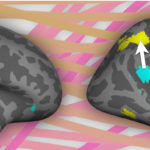
How does our brain enable us to pay attention selectively to some things, and to ignore others? What happens in the brain when we make important decisions? Our research focuses on understanding the neural basis of cognitive phenomena such as selective attention and decision making. To address these questions, our group has developed quantitative approaches […]
